Attitudes toward death in different historical eras
* Attention! This text has been translated using neural networks. If you notice an inaccuracy or would like to supplement the article, please report it in an email to: content@death.today.
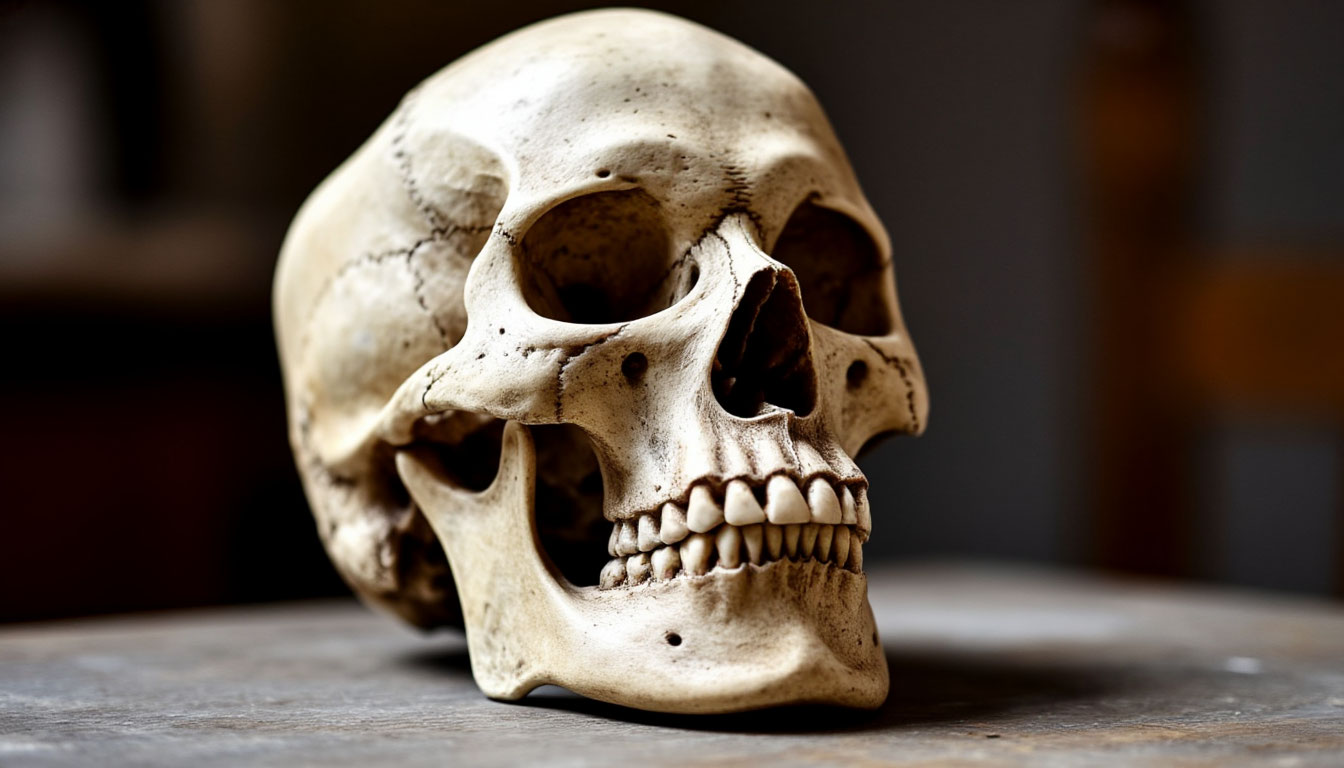
We live in an era where death has become perhaps the ultimate taboo. Sex is discussed loudly and often, money even louder, but death, the process of dying, and the experiences associated with it have been pushed to the periphery of public consciousness. It has moved from the home into the hospital ward, behind the thick curtains and closed doors of the ICU. We have learned to postpone it with the help of medicine, but when faced with it directly, we often find ourselves confused and defenseless, as culture no longer provides us with ready-made scripts for behavior or simple, comforting meanings.
However, this has not always been the case. For millennia, death was not just life's neighbor, but its central axis of meaning. How people relate to the finitude of existence defines their religion, art, philosophy, and even political structure.
The purpose of this article is to trace the evolution of the perception of death from ancient civilizations to the present day. We draw on the seminal research of French historian Philippe Ariès, who identified several successive types of attitudes toward death in Western culture, as well as on the works of philosophers that help us understand how the very fabric of human thought has changed.
The main thesis we will try to prove is this: the attitude toward death is always a mirror in which an era sees its core values and fears. As humanity changes, as its worldview changes, death takes on a new face each time.
Ancient world

The first civilizations did not know the bone-chilling terror of non-existence that is familiar to modern humans. For them, death was not a period, but a transition. A path leading either to another form of existence, or to a great nothingness, which, however, was also part of the world order.
Egypt
Ancient Egypt is perhaps the most striking illustration of "living for death." The entire gigantic infrastructure of this civilization—from the pyramids to the complex texts of the "Book of the Dead"—was subordinated to a single task: ensuring a worthy afterlife.
The Egyptians believed that death was not the annihilation of the personality, but only a temporary obstacle. The physical body had to be preserved (hence the art of mummification) so that the soul could return to it. The deceased went to the Judgment of Osiris, where their heart was weighed on the scales of truth. The vindicated entered the Field of Reeds — a place of eternal bliss, an almost literal copy of earthly life, but better: without disease, failure, or hunger.
Death here is not tragic. It is an exam. And people prepared for this exam their entire lives, building tombs and accumulating knowledge of spells that would help them pass the afterlife trials. As the historian Herodotus noted, Egyptians often called their homes "inns" and their tombs "eternal homes," emphasizing the temporariness of earthly existence.
Ancient Greece
The Greek view is more complex and contradictory than the Egyptian one. On one hand, the Greeks, especially in the Homeric era, saw death as the greatest misfortune. The souls of the dead went to gloomy Hades, where they led a miserable, disembodied existence. It is no coincidence that Achilles, met by Odysseus in the kingdom of the dead, utters the famous phrase: "I would rather be a serf on the land... than king over all the dead."
However, by the 5th–4th centuries BC, a different, philosophical view emerged.
- Plato and Socrates. For them, death was a great good. Socrates, before his execution, calmly discusses how philosophy is nothing other than "preparation for death." Death is the liberation of the immortal soul from the prison of the body. The soul finally gets the opportunity to contemplate true ideas, pure essences that were hidden from it during life.
- Epicurus. This philosopher offered perhaps the most elegant way to overcome the fear of death. His argument is simple and logical: "When we exist, death is not yet present, and when death is present, then we do not exist." Death has nothing to do with us while we live, and when it comes, we no longer exist to feel it. Fearing what we will never encounter is meaningless.
- The Stoics (Seneca, Marcus Aurelius). They saw death as part of the universal Logos, the natural law of nature. To be born and to die are two sides of the same process, like the changing of seasons. Death cannot be abolished, but one's attitude toward it can be changed. To accept one's fate with dignity, without complaining — that is the mark of a wise person.
Ancient East
Although our main focus is the Western tradition, we must mention the East, where an alternative model developed.
- India (Hinduism and Buddhism). Here, death was perceived as another link in the endless chain of rebirths (samsara). Dying is not scary in itself; what is scary is what you will be reborn as in the next life. The ultimate goal is not eternal bliss in paradise, but an exit from the cycle of births and deaths (moksha or nirvana), the merging of the individual "self" with the absolute.
- Ancient Japan (Shinto). Death was not seen as a final departure. The spirits of ancestors remained close to the living, participating in their daily lives. They were worshipped, consulted, and feared for angering them. Death was a way to become part of a lineage of guardian spirits, maintaining a connection with the home and descendants.
For the ancient person, death was a continuation of a dialogue. It was either a transition to another reality (Egypt, India) or part of the natural and cosmic cycle (Stoics, Shinto). The absence of individualism in the modern sense allowed people to more easily integrate their finitude into the infinity of the world. Death was "tamed," not in the sense that it wasn't feared, but in that it was built into the worldview and had its own, understandable place.
Middle ages
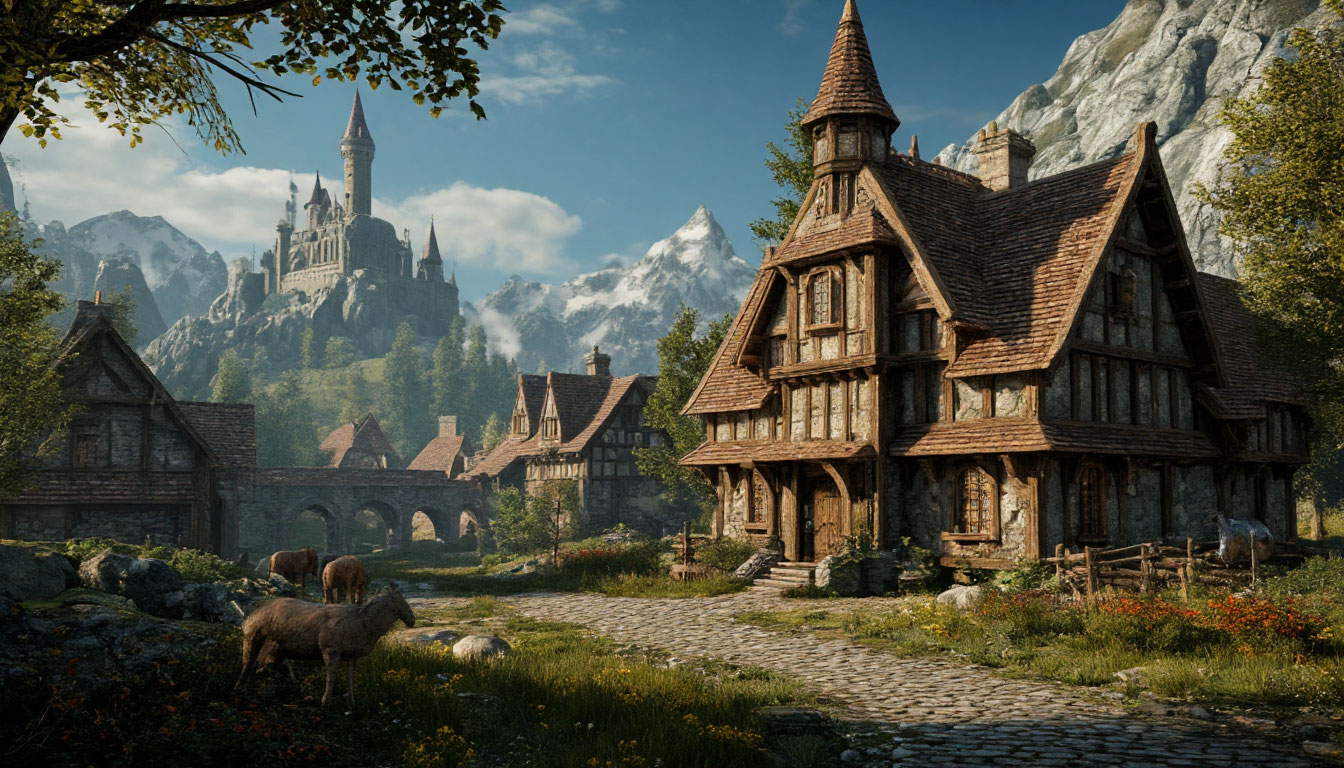
To understand medieval man, one must forget everything we know about modern individualism. The people of that era did not think of themselves as separate individuals, but as part of a vast body—Christendom. And for them, death was not so much a personal tragedy as a social and religious ritual, a familiar and even, in a sense, an everyday event.
"One's own death"
The French historian Philippe Ariès called this first stage of evolution "tamed death." What did this mean in practice?
Early medieval people usually knew when death was approaching. It was not customary to hide their condition from the dying person. On the contrary, relatives, neighbors, and children gathered around the deathbed. The dying person gave final instructions, said goodbye, and gave blessings. Death was a public act in which the entire community participated. It was not seen as something indecent or so frightening that it had to be hidden.
Of course, people feared pain and suffering, but not the very fact of passing; they did not have the existential horror familiar to us. Death was perceived as a natural end, as inevitable as the changing seasons.
Christian interpretation
Christianity radically changed the lens through which people viewed death. On one hand, death was declared a direct consequence of Adam's fall. It was punishment for original sin. Hence the deep sense of guilt and repentance that accompanied the Christian throughout life.
But there was also another, brighter pole. Through his death on the cross, Christ conquered death. He passed through the gates of decay and opened the path to resurrection for all believers. Therefore, death ceased to be simply a departure into non-existence, as it was for Homer's heroes. It became a sleep, followed by awakening and the Last Judgment.
The most important moment of dying was not the physical demise, but what happened to the soul afterward. Hence the enormous attention paid to the final moments.
Sudden death as shame
If for us, sudden death in sleep seems "easy," for medieval people it was a nightmare. To die without repentance, without confession, without last rites meant appearing before God unprepared.
There were special manuals called "Ars moriendi" ("The Art of Dying"). They taught a person how to properly spend their final hours. One had not just to endure pain, but to actively fight against demons who would attack the soul at that moment, tempting it with despair, pride, or avarice. The dying person was at the center of a cosmic battle for their immortal soul.
Therefore, death was the most important event, possibly more important than anything that happened in life. A person's eternal fate depended on how they died. Death without witnesses, without ritual, alone, meant that the soul had lost this battle.
The impact of epidemics
However, this calm, ritualized attitude toward death began to crack in the 14th century when Europe was hit by a wave of plague epidemics known as the "Black Death." Death ceased to be predictable and "tamed."
It mowed down people by the thousands,不分 righteous and sinner alike. Priests died before they could hear the confessions of the dying. Relatives abandoned each other to escape the contagion. Familiar rituals collapsed. Bodies were simply dumped into pits without funeral rites.
This was a terrible blow to the worldview. If previously people knew how to "correctly" die, the epidemic showed that death could be chaotic, meaningless, and lonely. It was in this era that the famous "Danse Macabre" appeared in art—images where Death, in the form of a skeleton, leads people of all classes, from peasant to king, in a dance. This was a new motif: not tamed death, but death as a dictator, death as the great equalizer, before whom all are equal and helpless.
The Middle Ages created a unique culture of dying. Death was embedded in life through ritual and church sacrament. It was not a subject of silence. But the great epidemics of the 14th century showed how fragile this construct was. The chaos of death burst into the ordered world, and humanity had to find new ways to cope with fear. This search would become the main theme of the next era.
Renaissance and early modern period
The Renaissance was a time of great upheaval. Man once again found himself at the center of the universe, but this return had a downside. If in the Middle Ages the fate of the soul was decided according to divine laws, now man was left alone with his finitude. Death ceased to be "tamed" and turned into a drama.
Art as a mirror of death
Never before had death been depicted so often and so frighteningly as in the 15th and 16th centuries. Artists of the Northern Renaissance—Bosch, Bruegel, Dürer—created images that still amaze with their grim fantasy.
The most striking example is Pieter Bruegel the Elder's painting "The Triumph of Death," painted in 1562. We see a scorched earth across which hordes of skeletons march. They kill everyone indiscriminately: kings, peasants, soldiers, lovers. A skeleton on a horse mows people down with a huge scythe; the doomed flee in terror, but a refuge turns out to be a coffin-shaped trap. This is not divine providence or a transition to another world. It is the triumph of chaos and annihilation.
Hieronymus Bosch went even further. In his paintings, death appears in the form of strange monsters with bird heads, devils, fantastic creatures. In that era, birds were often associated with messengers of the Devil and sin.
Why did art become so grim? Researchers link this to the aftermath of the plague epidemics and the general anxiety of the era. People realized that death could come suddenly and without repentance. As a scholarly article on cultural studies notes, in the Renaissance, a quick death was considered the greatest luck, because ordinary death was painful and prolonged.
Distant and close death
Philippe Ariès called the third stage of evolution "distant and close death." This sounds paradoxical but accurately reflects the duality of perception.
On one hand, death became more personal. People realized: it is I who will die. But on the other hand, the old defense mechanisms had collapsed. While the church once provided clear instructions and consolation, now people were left in confusion.
An interesting detail: in this era, the idea persisted that dying alone was shameful. Dying surrounded by relatives and neighbors was considered a worthy end to one's journey. The Russian proverb "in company, even death is beautiful" accurately captures this feeling. People still wanted their passing to be a public event, not a secret.
Thy death
The 18th and 19th centuries brought a new revolution in the perception of death. Ariès called this stage "thy death."
What changed? The focus shifted from one's own death to the death of another person—a loved one, a close one, a relative. This is linked to the strengthening of emotional bonds within the family. People became more attached to each other, and loss began to be experienced much more acutely.
English Graveyard Poetry. One of the first manifestos of this new attitude was Edward Young's lengthy poem "The Complaint: or, Night-Thoughts on Life, Death, & Immortality," published in 1742–1745. This work opened up the theme of "Night poetry" in European literature—a special melancholic contemplation directed towards death and the hereafter. Young created a poetic language for expressing grief, making the experience of loss a subject of high art.
Sentimentalism and the cult of memory. Laurence Sterne, in his novel "A Sentimental Journey Through France and Italy" (1768), showed how ordinary objects become bridges to the deceased. The hero keeps a snuffbox, given to him by a monk, "equally with the books of my devotions." This trinket replaces the departed person, allowing one to evoke their image in memory and thus overcome separation. Sterne created a genuine cult of reminiscence, which was embraced by readers across Europe. In Germany, they even began producing horn snuffboxes with quotes from Sterne, and one admirer proposed creating an English-style park reminiscent of a cemetery, with monuments in honor of literary characters. The cemetery ceased to be just a burial place and turned into a space of memory and encounter with the departed.
German Romanticism. Novalis, in his "Hymns to the Night" (1799), went even further. For him, death is not an end, but a transition to a higher reality. Night, traditionally associated with fear and non-existence, becomes for Novalis a time of mystical union with his deceased beloved. The poet yearns not just for the departed person, but for death itself as a way to be eternally united with his love. Death is aestheticized and romanticized to the extreme.
Ernst Theodor Amadeus Hoffmann, in the novella "The Doge and Dogess," created an image of Venice as a space where love and death are inseparable. In this "decaying city," the characters become prisoners of their own feelings, and death becomes the only way to preserve love.
Gloomy Fantasies. There were also more morbid manifestations of this cult. The novels of the Marquis de Sade often feature scenes of intercourse with corpses, grave robbing, and necrophilic fantasies. Jan Potocki, in "The Manuscript Found in Saragossa," tells the story of a murderer who spends the night in a church next to the graves of his victim and her fiancé, and at midnight sees the dead rise from their coffins and sing litanies. These dark narratives are also part of the new attitude toward death: it ceased to be distant and abstract, becoming an object of morbid, sometimes pathological interest, a subject of passion and fantasy.
In literature and art, a cult of graves and cemeteries emerged. The Russian sentimental tale of the late 18th century, Karamzin's "Poor Liza," made the locus of the grave a central narrative element. The heroine dies from unhappy love, and her grave becomes a place of pilgrimage where the living can indulge in grief and remembrance.
Romanticism turned death into an aesthetic object. The fear of death transformed into a sense of the beautiful. Poets and artists sought inspiration in death, seeing in it deliverance from suffering or a way to unite with the departed.
In 19th-century Russian poetry, special concepts of immortality developed. Poets sought ways to overcome death through creativity, through the memory of descendants, through merging with nature. Lermontov, Pushkin, Baratynsky created a whole tradition of "mortal consciousness," where death is understood as a deeply personal, intimate experience.
The cemetery as a meeting place
In this era, the attitude toward cemeteries also changed. Previously, they were simply burial places, often within the city limits, next to the church. Now, cemeteries were moved outside the city and transformed into parks where people walked, reflected, and met.
Visiting a grave became an important ritual. People brought flowers, tended the graves, and stood in silence for a long time. It was a way to maintain a connection with the departed, to prolong their presence in their lives.
The Renaissance and Early Modern period radically changed the attitude toward death. From a familiar, ritualized event, it turned into a personal drama, a source of anxiety and, simultaneously, inspiration. Art captured death in frightening images of skeletons and monsters, while literature made it the main character of sentimental and romantic works. Humanity stood alone before death but learned to turn that solitude into creativity and memory.
Modernity

The 20th century was a time of the most radical transformation in humanity's relationship with death. What for millennia had been a public, ritualized event embedded in life suddenly disappeared from view, moved behind closed doors, and turned into an uncomfortable topic that was "not discussed." Philippe Ariès called this stage "forbidden death" or "reversed death."
Exclusion from the public sphere
The main characteristic of the modern attitude toward death is its invisibility. If in the Middle Ages people died in the arms of their relatives and neighbors, in public, then in the 20th century, death finally left the home. It moved into hospitals, hospices, and intensive care units—into spaces where outsiders are denied access.
What lies behind this shift? First and foremost, the development of medicine. Death ceased to be a natural event and became a "failure" of doctors, a defeat in the battle for life. Dying became a process that could and should be controlled with technology. Humanity, in the words of one researcher, "by entrusting itself to the Ministry of Health, received the illusory liberation from the mystery of death, from the need to prepare for this moment."
Society behaves as if no one dies. The death of an individual no longer breaches the fabric of society as it once did. It has become a private matter, involving only the closest people.
Tabooing the topic
In the 20th century, a paradoxical situation arose. Death surrounds us everywhere—in the news, in movies, in video games. But real death, the death of a specific person, became an indecent topic. It is not discussed in polite society.
As one contemporary researcher accurately noted, "we thought that the only taboo topic was sex, but it turns out that death is even more taboo, even more chaotic in perception." This is the admission of a person who has faced loss and discovered that society has no ready-made scripts for support, no idea how to deal with grief.
Archpriest Alexander Schmemann linked this tabooing with secularization. A society focused on consumption, happiness, and success simply sees no meaning in death. It does not fit into a worldview where the main goal is to have pleasure and enjoy life. Hence the panicked fear of even mentioning death, the desire to minimize everything associated with it.
Medicalization and institutionalization of dying
The process of dying in the modern world is strictly regulated. It takes place in the prescribed conditions of hospitals and hospices, under the control of medical staff and technology. On one hand, this provides certain benefits: pain relief, care, professional help. But there is also a downside.
Researchers speak of "control by technology and impersonal care from strangers." A person finds themselves in a situation where their final days are spent not among family, but among strangers in white coats. The most intimate, most important time of life becomes a "state-sanctioned isolation."
Moreover, the dying person is often kept in the dark about their condition. Loved ones and medical staff enter into a conspiracy of silence, believing it is better not to traumatize the person with the knowledge of their impending death. But this deprives the person of the opportunity to prepare, to say goodbye, to perform those final rituals that for centuries helped people depart with dignity.
Philosophers and bioethicists today speak of the formation of a special "subjectivity of the dying person"—a person whose identity is constituted by medical discourse, technology, and institutional rules. This is no longer the free individual who manages their own life and death, but an object of medical manipulation.
Crisis of rituals and loss of grief culture
With the departure of death from the public space, traditional ways of coping with grief have undergone significant changes. The rituals themselves—wakes, funerals, memorial services—have not disappeared entirely. They have been preserved and are still practiced everywhere. However, the content of these rituals, their place in a person's life and in society, has changed. Sociologists and anthropologists speak of the transformation and individualization of funeral rites.
- Modern rituals often become more formal and abbreviated. While in traditional culture, funerals and wakes could last for several days and included many symbolic actions understood by all participants, today they are often reduced to a minimum set of mandatory procedures. People may not know how to behave properly, what to say, or how long to mourn.
- The communal basis of rituals has been lost. In the past, the entire village, the entire neighborhood, the entire professional community participated in funerals. Today, the circle of participants is often limited to the closest people. Grief has become a more private experience, and support from society is less engaged and less ritualized.
- In urban culture, professional mourners and traditional lamentations—those forms of expressing grief that for centuries helped people vent emotions and structure the experience of loss—have practically disappeared. Modern people often feel embarrassed to cry loudly in public or to display their grief openly.
Psychologist Ekaterina Khlomova accurately notes: "Grief is experienced the way it is experienced; there is no instruction manual." This is true, but the absence of clear cultural patterns, once passed down from generation to generation, makes the grieving process more difficult. People often do not know if what they are feeling is "normal," how long the acute phase of grief should last, or when they can return to normal life.
At the same time, the rituals themselves persist and are even experiencing a kind of revival. In recent decades, there has been a growing interest in individual, personalized funeral ceremonies that reflect the personality of the deceased. People increasingly want funerals to be not standard, but "human," filled with personal meaning.
Death in the media
Yet death has not disappeared from the information space. On the contrary, it is everywhere. News is filled with reports of disasters, terrorist attacks, and wars. TV series and films exploit images of violence and death.
Researchers note that in the 20th century, a special phenomenon of the "mediatization of death" developed. Death becomes accessible only through intermediaries—photography, video, reportage. This creates an illusion of death being under control, "tamed" through the image. But it is an illusion. Real death, the death of a loved one, still catches us off guard.
Euthanasia and new ethical challenges
At the end of the 20th and beginning of the 21st century, humanity faced a fundamentally new question: does a person have the right to voluntarily end their life? Euthanasia, legalized in a number of countries, has become a symbol of a new attitude toward death.
Supporters speak of the right to a dignified death, of relief from suffering. Opponents see in it a dangerous temptation and the blurring of boundaries. Orthodox publicist Sergei Khudiev points to a troubling trend: euthanasia has ceased to be an exceptional measure for the hopelessly ill and is turning into "socially encouraged suicide."
This problem is particularly acute in countries with aging populations. Economic logic pushes toward "cost optimization": why spend resources on pensioners and the sick if they can be offered an "easy death"? This is a cynical but real challenge of our time.
Today, the boundary between the living and the dead is becoming thinner and more permeable thanks to new technologies. Resuscitation, artificial life support, transplantology—all this blurs previous clear criteria of death and poses complex ethical questions for society.
The hospice movement
However, there are also encouraging trends. In opposition to the soulless medicalization of death, the hospice movement emerged. Its philosophy is fundamentally different: death is neither hastened nor delayed, but the patient is provided with a quality life until their very last days.
In hospices, they try to restore a human face to death. The patient is surrounded by care, the truth is not hidden from them, and they are helped to live their remaining time with dignity. This is an attempt to restore what was lost in the 20th century—a culture of dying where death is perceived as a natural part of life.
The modern world finds itself in a complex and contradictory situation. On one hand, death is excluded from the public sphere, tabooed, hidden behind hospital walls. On the other hand, it is omnipresent in the media, generating anxiety and fear. Humanity has lost its old rituals and has not found new ones. Dying has become a technological process, not a human event. But the hospice movement and the growing awareness of the problem offer hope that society can return death to its proper place—not as an enemy, but as a natural and significant completion of life.
Conclusion
A society's ability to talk about death, to integrate it into its worldview, and to have clear rituals for coping with loss is a marker of its maturity and psychological health. By repressing death, we do not overcome fear; we only drive it inward, where it continues its destructive work.
Perhaps returning to an open dialogue about the finitude of life, to meaningful rituals, to the recognition of death as a natural part of human existence, is the only way to reduce the existential fear that plagues modern humanity. It is no coincidence that interest is growing today in the hospice movement, in the psychology of loss, and in personalized funeral ceremonies. People are intuitively seeking what has been lost: the opportunity to meet death with dignity, not in solitude and not in silence.
Death was and remains a mirror of life. And how we relate to it says much more about us than we would like to think.
Updated : 2026-03-08