Death in Buddhism
* Attention! This text has been translated using neural networks. If you notice an inaccuracy or would like to supplement the article, please report it in an email to: content@death.today.
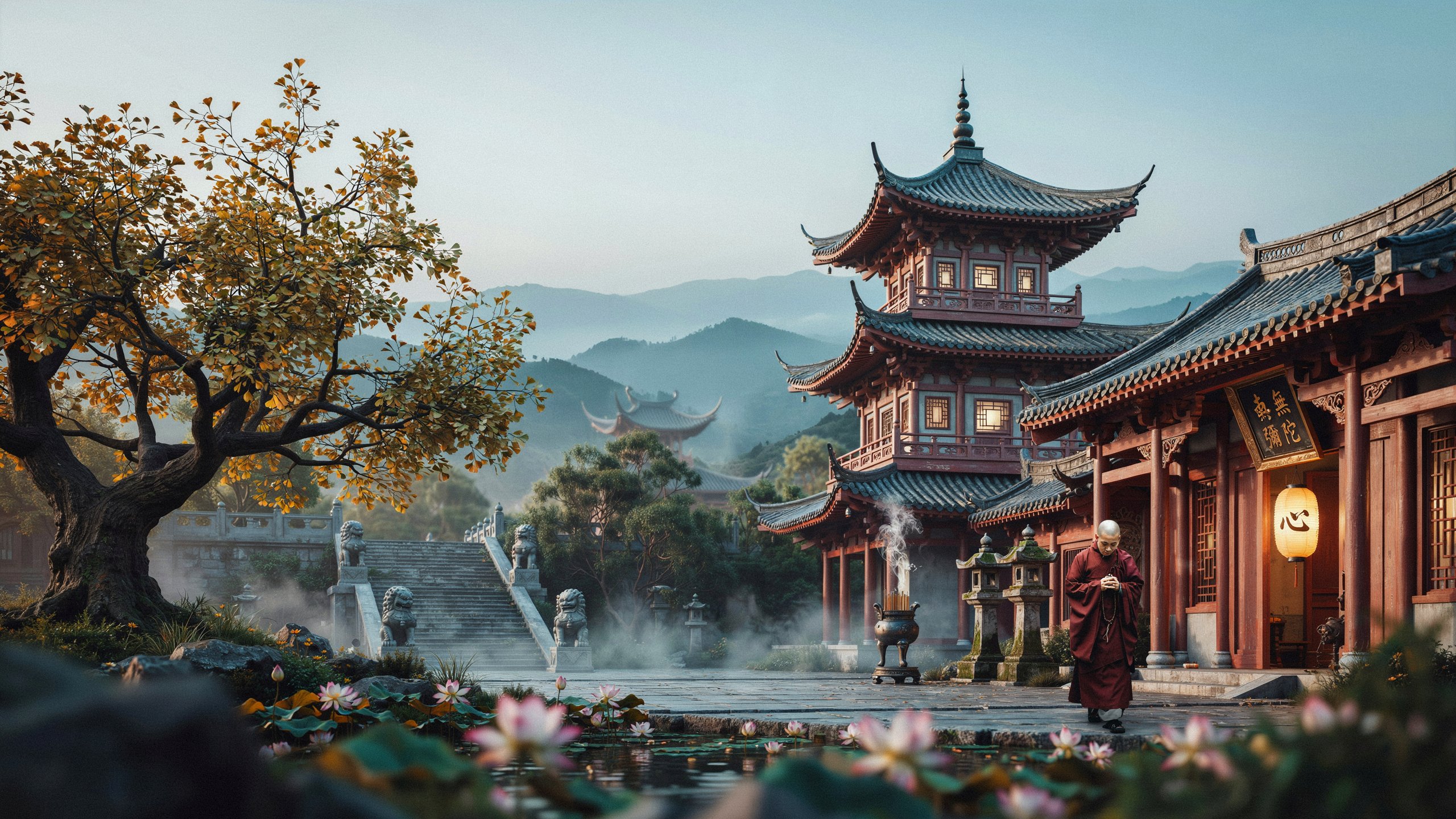
In the Buddhist tradition, death is not perceived as a point of no return or an absolute disappearance. Rather, it is another step on a long path where consciousness repeatedly changes its forms. Such a view helps one approach the end of life without panic, but with an understanding of the naturalness of what is happening. This article explains how Buddhist teachings describe the dying process and what loved ones should consider if the person followed this tradition.
The text will discuss the temporary nature of the body, the intermediate state between lives, as well as what steps are usually taken to support the dying person and their relatives. It is important to remember that customs may vary depending on the region and school of Buddhism. The general principles described here help to navigate the topic.
The material is for informational purposes and does not replace the living advice of a lama or other spiritual teacher. The main goal is to calmly and without unnecessary detail introduce the reader to the logic of the Buddhist approach to death, farewell, and remembrance.
The wheel of samsara. Death as a transition, not an end
According to Buddhist teaching, life is not limited to a single existence. Consciousness, like a stream, passes from one form to another, going through births and deaths repeatedly. This cycle is called samsara. One can only be liberated from it by attaining enlightenment, or nirvana, when suffering and attachments finally cease.
In this worldview, the body is seen as a temporary shell. It serves for a particular incarnation but does not hold an unchanging soul. What passes from life to life is described by Buddhists as a constantly changing stream of subtle consciousness, carrying the imprints of all past actions and thoughts.
Karma plays a key role in determining the next life. It is the sum total of all intentional actions, words, and thoughts of a person. Wholesome deeds lead to a higher form of birth, while unwholesome ones may lead to lower realms. Several types of rebirth are possible:
- the realm of gods (devas);
- the realm of demi-gods (asuras);
- the human realm;
- the animal realm;
- the realm of hungry ghosts (pretas);
- the hell realms.
Among all these states, the human one is considered most favorable for spiritual development, because only there both freedom of choice and sufficient suffering exist to motivate the search for an exit. Death thus becomes not a punishment, but a natural door through which consciousness passes to the next stage of its journey.
The first hours and days. Supporting the dying and caring for the soul
In the Buddhist tradition, special attention is given to the state of the person at the time of passing. It is believed that the last thoughts and attitude of the dying person can strongly influence the nature of the next rebirth. Therefore, it is important that those who can create a calm environment, free from fuss and loud lamentations, are present.
Relatives can help the dying person focus on wholesome objects, such as an image of the Buddha, or gently remind them of the value of compassion and non-attachment to worldly things. In some cases, it is customary to invite a lama who recites special texts or performs the Phowa practice. This practice helps the consciousness to consciously leave the body and head toward a better rebirth.
After breathing has stopped, the body is usually not touched for several hours, and sometimes up to three days. It is believed that consciousness may remain connected to the physical form and not immediately realize what has happened. During this period, instead of crying and loud conversations, relatives are advised to:
- recite prayers or mantras, for example "Om Mani Padme Hum";
- consult texts that describe the intermediate state;
- maintain a calm, kind silence;
- avoid sudden movements and unnecessary touching of the body.
This approach helps the dying person go through the transition without excessive fear or confusion. Care for the soul at this moment is placed above any formalities related to the body.
The intermediate state. A path of 49 days

Once consciousness has completely separated from the body, it is not reborn instantly. Buddhist teaching describes a stage called bardo, the intermediate state between death and a new birth. This period usually lasts up to 49 days, although under certain circumstances rebirth may occur earlier. Throughout this time, consciousness retains perception but lacks a familiar physical support.
In the first days after death, consciousness may not immediately understand that the body has died. It wanders, encountering images generated by previous attachments and actions. Gradually, a stage arrives when vivid visions appear, frightening an unprepared person. These are not external demons but reflections of one's own karma. If the deceased can recognize their nature and remain calm, they may attain liberation directly in the bardo.
The entire 49‑day path is divided into three consecutive stages:
- the bardo of the moment of death, when consciousness just leaves the body and experiences initial surprise;
- the bardo of experiencing reality, lasting about 14 days and accompanied by karmic images and illusions;
- the bardo of seeking a new birth, when consciousness begins to be drawn toward a future form of existence depending on accumulated karma.
At each of these stages, the deceased can be helped by the mental support of relatives and clergy. Reciting mantras and offering good wishes act as guides in a space where there is no sun or moon. This is why, during the 49 days, Buddhists try to be especially mindful of their thoughts and actions, dedicating the merit of wholesome deeds to the departed.
Attitude toward the body. Modest and without attachment
In the Buddhist tradition, physical remains are not considered something that requires prolonged veneration or elaborate rituals. The body is compared to old clothes that are ready to be removed. The main focus is on the soul and its transition, not on preserving the shell. Nevertheless, there are generally accepted ways of handling the body that help relatives show respect and complete the earthly story of the deceased.
The body is usually left undisturbed for several hours or days so that the process of consciousness departing finishes naturally. Then a washing is performed, and the deceased is dressed in simple clothing without excess. Fabrics of calm tones, such as white or black, are often used. In some cases, small objects like prayer beads or coins are placed with the body, but this depends on local tradition and the lama's instructions.
Regarding burial, Buddhism does not prescribe a single strict method. Historically, different options have developed, and all are considered permissible:
- burial in the ground;
- cremation;
- water burial (committing the body to water);
- sky burial (leaving the body in an open place for birds and animals).
In modern conditions, Buddhists most often choose cremation or burial in the ground. What matters is not which method is chosen, but the attitude with which relatives let go of the deceased. Autopsy is avoided if possible, as interference with the body in the first days is considered undesirable. However, when it is necessary for objective reasons, tradition does not forbid it.
Organizing the funeral. Traditions and practical aspects
When it comes to concrete steps, the first thing usually done is to invite a lama. The clergyman helps determine an auspicious day for the funeral, taking into account the date of birth and circumstances of death. He may also indicate how to properly orient the body during burial, which color of fabric to prefer, and what prayers should be recited. Without such recommendations, a Buddhist family rarely makes decisions, because the task is to help the soul, not merely fulfill a formality.
On the day of the funeral, relatives are advised to avoid loud weeping, quarrels, and especially alcohol. It is believed that negative emotions or disrespectful behavior may create additional obstacles for the deceased in the bardo. Instead, those present quietly recite mantras or simply maintain inner calm. In some traditions, women are not allowed to participate in carrying out the body or to be at the grave. Pregnant women and young children usually stay elsewhere.
There are several general rules often observed at Buddhist funerals:
- the body is carried out headfirst or in a specific direction (indicated by the lama);
- ceremony participants do not touch the deceased unless absolutely necessary;
- crying and loudly expressing grief is not customary, so as not to disturb the consciousness;
- after the ritual is completed, all present wash their hands and face, sometimes purifying themselves with incense.
After burial or cremation, it is customary to purify the home to which the relatives return. The lama may perform a short ritual invoking well-being. The memorial meal is usually organized without alcohol, in a quiet and modest setting. The main emphasis shifts from external ceremonies to mental support for the departed, which continues for the next 49 days.
Mourning and memorial days
The first 7 days
After the funeral, the most important period for supporting the soul of the deceased begins. During the 49 days, relatives usually request prayers at the temple or invite a lama to the home. Special importance is given to every seventh day, when, according to the teaching, consciousness experiences another stage of the bardo. On such days, family members gather to recite mantras, make offerings, and dedicate accumulated merit to the departed.
The final 49th day
This day is considered the moment when consciousness finally attains a new birth. Relatives often visit a monastery or temple, offer food and necessary items to the clergy, and listen to teachings. At home, it is customary to light a butter lamp and offer simple food, such as rice, to those present. It is believed that from this day onward, the soul no longer needs such intensive support, although the memory of it remains.
Annual memorial traditions
Buddhism does not prescribe strict mourning periods like those found in some other cultures. However, many families organize a quiet memorial once a year among their closest people. In some Buddhist traditions, there is a special festival for meeting the souls of ancestors, which usually falls in the middle of the seventh lunar month. On these days, it is customary to clean burial sites, light lanterns, and give alms.
General recommendations for relatives
Throughout the mourning period, relatives are advised to avoid noisy entertainment and brightly colored clothing. But this is not a strict rule, rather a sign of respect. Much more important is that the thoughts of the loved ones remain kind and their actions wholesome. Any compassionate deed, whether helping those in need or making offerings to a temple, can be mentally dedicated to the deceased and thereby ease their path in the next life.
Key points. What is important to remember
- Death is not an end, but a transition. Consciousness does not disappear but changes form depending on karma. The body is only a temporary dwelling; care for the soul always comes first.
- The state of the dying person in the last minutes is considered decisive for the future birth. Relatives are advised to create a calm atmosphere, recite prayers, and avoid loud crying or arguments. Inviting a lama to perform the Phowa practice can be important help.
- After death, consciousness is not reborn instantly but passes through the intermediate state of bardo, which usually lasts up to 49 days. During this time, the deceased is helped by prayers, good wishes, and wholesome actions of the loved ones. Special attention is given to every seventh day.
- The body does not require elaborate veneration. Remains can be committed to earth, fire, or water, or left in an open place if traditions allow. Modern Buddhists more often choose cremation or ordinary burial. Autopsy is avoided if possible, but it is not forbidden when necessary.
- At funerals, it is not customary to cry loudly, quarrel, or consume alcohol. The lama helps choose the day, direction for carrying out the body, and other important details. Women, pregnant women, and young children sometimes do not attend the cemetery, following local customs.
- Relatives may wear modest clothing and avoid entertainment, but this is more a sign of respect than a strict rule. The main task during the 49 days and beyond is to support the soul of the deceased through wholesome deeds, prayers, and offerings.
- Annual memorials, the festival of meeting the ancestors, or simply a quiet remembrance among family are equally appropriate. The most valuable thing the living can do for the departed is to keep compassion in their hearts and perform wholesome deeds, dedicating their merit to those who have already left this world.
Updated : 2026-06-07