Death in Christianity
* Attention! This text has been translated using neural networks. If you notice an inaccuracy or would like to supplement the article, please report it in an email to: content@death.today.
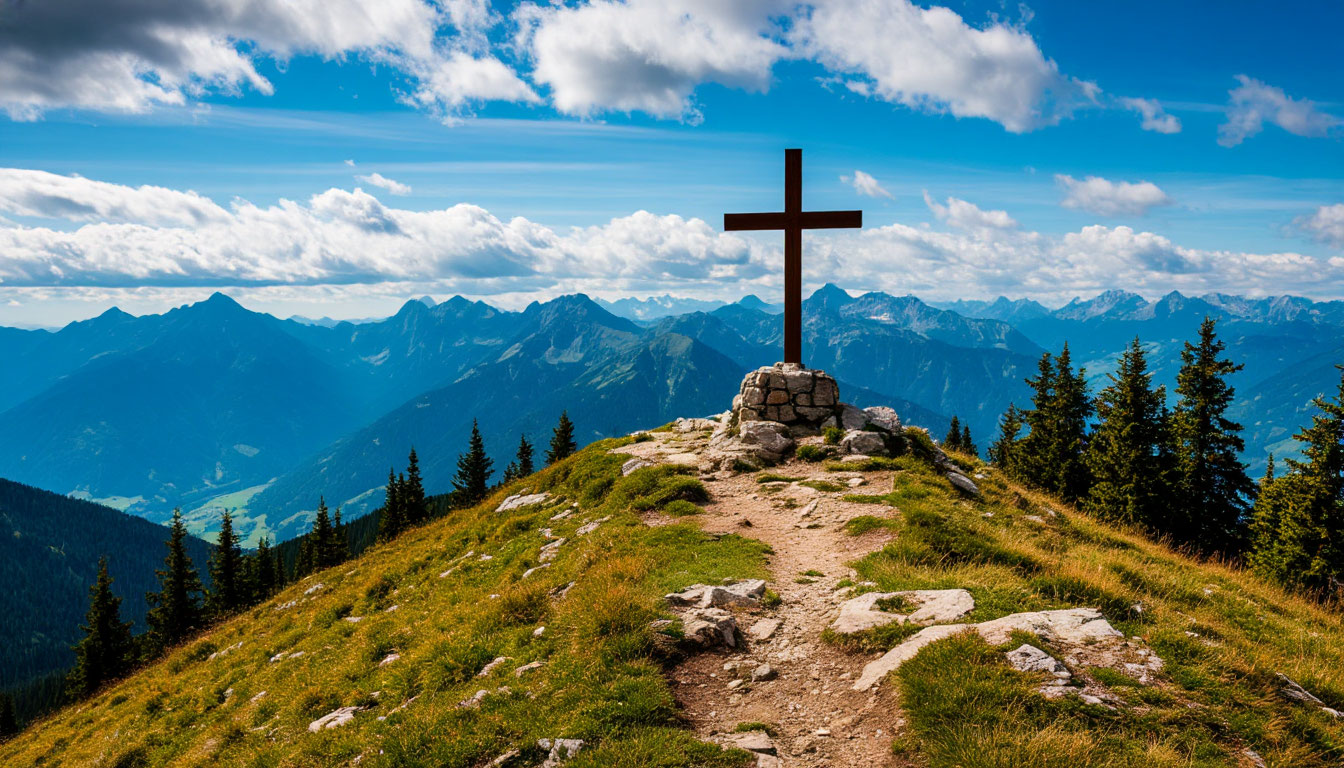
For the Christian worldview, death is not a taboo or a point after which emptiness follows. It is the most important meaningful boundary, beyond which, according to faith, eternal life begins. The attitude toward death here is built around the central event of all Christian history — the Resurrection of Christ. It is this that changes the perspective: death ceases to be perceived as an absolute defeat or catastrophe, acquiring the status of a transition, a stage on the path to meeting the Creator.
In this article we will talk about how Christianity speaks about death, what happens to the soul after physical death, what traditions of farewell have developed in this religion, and why faith is able to support a person at the moment of loss. We will consider the principles common to all Christians, and also separately focus on the features that exist in Orthodoxy, Catholicism, and Protestantism. The material is informational in nature and is intended to help the reader navigate the diversity of Christian traditions related to the theme of death.
Death in the Christian understanding
In Christian teaching, death was not part of the original plan for man. According to Holy Scripture, God did not create death; it entered the world as a consequence of the Fall — the rupture of those harmonious relations that existed between the Creator and man. From that moment, human nature became vulnerable to corruption, and the death of the body became the limit that restricts the action of evil and gives the soul the opportunity to pass into another reality.
The main thing that distinguishes the Christian attitude toward death is the conviction that it does not destroy the personality. The death of the body is understood as a temporary separation of soul and body. The soul, immortal by its nature, continues to exist, retaining memory, feelings, connection with God, and with those who are dear. Therefore, in the Christian tradition, the deceased is often spoken of not as one who has “gone into non-existence,” but as one who has “fallen asleep,” that is, someone who has fallen asleep to awaken at the appointed hour for eternity.
In this context, the personal experience of the believer acquires special significance. Christianity does not call for artificially avoiding the fear of death, but offers a path on which this fear gradually gives way to trust in God. One of the important virtues is considered “remembrance of death” — not a gloomy fixation on the end of life, but a conscious attitude toward every day as a gift that can be lived worthily. In prayers, Christians ask for what is called a “blameless” end: peaceful, in a state of spiritual reconciliation with God and loved ones.
The death of Christ, crucified and risen, is the key for Christians to understanding their own death. According to patristic teaching, the Savior passed through death not by compulsion, but freely, in order to deprive it of its destructive power. From that moment, death ceases to be a hopeless end: it becomes the path through which a person, in the words of the Apostle Paul, can pass “from death to life.” That is why in the Christian tradition the day of death is often called the day of birth into eternity, and in the lives of the saints it is emphasized that their death was not a tragedy, but a long-awaited meeting with the Lord.
At the same time, Christianity does not deny the naturalness of grief. Christ himself, upon learning of the death of his friend Lazarus, wept. Grief over separation from a loved one is considered a natural human feeling. Faith does not cancel the pain of loss, but gives hope that can transform this pain.
Common ideas about the afterlife
Christianity does not provide a detailed “map” of the afterlife accessible to human understanding. However, over the centuries, a number of ideas have developed in church tradition that help believers make sense of the path of the soul after physical death. These ideas are based on Holy Scripture, patristic texts, and the liturgical experience of the Church. At the same time, it is important to understand that many details describe a reality that by definition goes beyond earthly experience, and therefore are perceived rather as images than as literal pictures.
Immortality of the soul and meeting with God

According to Christian teaching, a person’s soul does not die along with the body. It continues to live, retaining the traits that were formed in the person during life. This refers not only to memory or intellectual abilities, but also to the inner disposition: what the soul was inclined toward — good or evil, love or selfishness. It is this inner state that largely determines how the soul will perceive the meeting with God after death.
Unlike ideas that the soul “falls asleep” until the Last Judgment, most Christian traditions say that after separation from the body, the soul immediately finds itself in a new reality. It appears before the so-called particular judgment, where its temporary state until the general resurrection is determined. The final decision on a person’s eternal fate, according to Christian doctrine, will be made at the Last Judgment after the Second Coming of Christ.
Heaven, hell, and purgatory
In ideas about where exactly the soul is after the particular judgment, there are principles common to all Christians and confessional differences. What is common is the conviction that there are two main states.
Heaven is understood not so much as a “place” in the geographical sense, but as a state of union with God, fullness of life and love, for which man was originally destined. It is not simply a reward for good deeds, but a natural consequence of the inner connection with the Creator that a person built throughout earthly life.
Hell, on the contrary, is a state of separation from God, experienced as suffering. In patristic tradition, it is often emphasized that the torments of hell consist not in God punishing a person, but in the fact that a person who rejected love during life turns out to be unable to accept it in eternity. The fire and darkness mentioned in Scripture are images conveying the weight of this state.
The differences between confessions mainly concern whether there is an intermediate state between heaven and hell. This will be discussed in more detail in the section on the features of the confessions.
Prayer for the departed
One of the key practices uniting most Christian traditions (with the exception of Protestantism) is prayer for the dead. The meaning of this prayer is not to “appease” God or change His will. Rather, it expresses the belief that love does not cease with physical death and that the living and the departed remain connected in Christ.
Special importance is attached to prayer in the first forty days after death. According to the idea widespread in Orthodoxy and partly in Catholicism, during this period the soul passes through various trials (toll-houses or purification), and the prayer of loved ones can ease this path. Even if a person was not blameless during life, the Church teaches that God’s mercy and the intercession of those praying can grant him relief.
In practice, this is expressed in several forms:
- Submitting notes for the liturgy, during which the priest removes particles for the repose.
- Ordering memorial services or funeral services.
- Home prayer of relatives and loved ones.
- Memorial meals, which serve not so much a ritual as a consoling and unifying function.
Expectation of the general resurrection
An essential part of Christian teaching about death is faith in the general resurrection. According to the Creed, Christians confess “the resurrection of the dead and the life of the world to come.” This means that the temporary state of the soul after the particular judgment is not final. At the end of time, after the Second Coming of Christ, the resurrection of all the dead will occur. The soul will reunite with the body, but this body will already be different — transfigured, incorruptible, freed from the infirmities of earthly life. It is then that the fullness of the Kingdom of God will come, and every person in the fullness of their being (both soul and body) will finally determine their relationship with God.
This hope for resurrection gives the Christian attitude toward death a special feature. Grief over separation is not canceled, but it ceases to be hopeless. The believer knows that separation from a loved one is temporary and that a meeting lies ahead.
Christian traditions of farewell and burial
Farewell to the departed in the Christian tradition is built around respect for the body as the temple of the soul. Although the soul is immortal, the body is not considered something secondary or accidental. In the Christian understanding, a person is whole, and even after death the body retains a connection with the personality, awaiting the future resurrection. That is why burial traditions have always been surrounded by special attention and reverence.
When a loved one departs
If there is reason to believe that a person’s life is coming to an end, relatives can take care that he receives spiritual support. This refers not only to medical assistance, but also to the opportunity for reconciliation with God. In the Christian tradition, the practice of inviting a priest exists for this purpose.
The priest can come to the home or hospital to perform several sacraments:
- Confession, during which a person can be reconciled with God and receive forgiveness of sins.
- Anointing of the sick (unction), which is performed to strengthen spiritual and bodily powers.
- Holy Communion (Eucharist), when a person receives the Body and Blood of Christ as viaticum before the transition to eternity.
In the Catholic tradition, this communion is called viaticum, which means “provision for the journey.” It is regarded as special spiritual food that strengthens a person in the final stage of the earthly path.
In addition to the sacraments, relatives can read prayers for the dying. In the Orthodox tradition, there is a canon for the departure of the soul, which is intended to ease the death agony. If a person suffers for a long time and painfully, with the blessing of a priest, a special rite may be read that contains a petition for a peaceful end.
It is important that Christianity does not insist on telling the dying person about the approaching death in all circumstances. The decision on how openly to discuss this issue is made based on the person’s condition. If an illusory hope for recovery prevents him from repenting and preparing for the meeting with God, it makes sense for relatives to carefully help him realize the reality. If, however, the person is already inwardly ready and is at peace with himself and with God, there is no need to additionally disturb him with conversations about the end.
Attitude toward the body of the deceased
After death occurs, the body is prepared for burial. In the Christian tradition, this is done carefully and reverently. Usually the body is washed, clothed in clean clothes, and in Orthodoxy and Catholicism, funeral garments are often put on, which symbolize baptismal purity. A cross or crucifix is placed in the coffin, and in the Orthodox tradition also an icon or a small image of the Savior.
It is important to emphasize that these actions do not have a magical character. They are manifestations of love and respect for the deceased, as well as evidence of faith in the fact that the body, even after separation from the soul, deserves dignified treatment.
Church farewell
The central moment of Christian funerals is the service performed over the coffin. In different confessions it is called differently and has its own features, but the general essence is the same: it is a prayer for the departed, reading of Holy Scripture, and entrusting the soul to God.
In Orthodoxy, this service is called the funeral service (otpevanije). It is performed in a church or, in exceptional cases, at home or in a funeral hall. During the funeral service, the priest reads the prayer of absolution, which testifies to the forgiveness of the sins in which the person managed to repent.
In Catholicism, the funeral service is usually performed as part of a Requiem Mass. It also includes reading of Scripture, prayers, and the Eucharist. Catholics attach great importance to the deceased being buried in their own parish, where people who knew him during life pray for him.
In Protestantism, as a rule, there is no service analogous to the funeral service. Instead, a farewell sermon is delivered, which is dedicated to the life of the deceased and reminds those present of the Christian hope of resurrection. The emphasis is placed on consoling the loved ones and bearing witness to the faith.
If for some reason the church farewell did not take place before the burial, in many Christian traditions there is the possibility of performing it later. For example, in Orthodoxy, a funeral service in absentia is practiced, and in Catholicism a Requiem Mass can be ordered.
Burial and attitude toward cremation
The traditional Christian method of burial is interment in the ground. This tradition goes back to the attitude toward the body as the temple of the soul and to faith in the resurrection. Burial in the ground symbolizes the return of man to the earth from which he was taken, with the hope of future awakening.
The issue of cremation is resolved differently in different confessions, but the general principle can be formulated as follows. Cremation is not considered an obstacle to the salvation of the soul or to the future resurrection, since God is not limited by the method of burial. However, in those traditions where it is not a forced measure, preference is given to burial in the ground. If cremation is performed, it is recommended to find a worthy place for the burial of the ashes, rather than keeping them at home.
Timing of burial
In the Christian tradition there are no strict canonical prescriptions that burial must take place strictly on the third day. However, the practice has developed of holding funerals within the first days after death. This is connected both with hygienic considerations and with the fact that in the first days after death the prayer of loved ones is considered especially important for the soul. At the same time, in different countries and communities the timing may vary depending on local customs and legislation.
Features in the main Christian confessions
With all the unity of the Christian view of death as a transition to eternal life, different confessions have developed their own theological emphases and ritual traditions. These differences concern how exactly the posthumous fate of the soul is understood, which practices are considered the most important, and how farewell to the deceased is organized. Below we will consider the features of Orthodoxy, Catholicism, and Protestantism, bearing in mind that within each of these traditions there is internal diversity.
Orthodoxy
In the Orthodox tradition, the teaching about death is closely connected with the experience of ascetic life and liturgical practice. Here it is especially emphasized that death is not an instantaneous transition, but a process in which the soul has to pass through a certain path.
Toll-houses
One of the characteristic features of the Orthodox understanding of the afterlife is the teaching about toll-houses. According to this tradition, after separation from the body, the soul passes through a series of trials over the course of forty days, which are connected with the passions and sins that the person manifested during life. Demons, accusing the soul of sins, try to detain it, while the guardian angel points to repentance and good deeds. This teaching is not a dogma, that is, it does not require obligatory acceptance by every believer, but it is widespread and is reflected in liturgical texts and lives of the saints. The meaning of the toll-houses is not to present God as a severe judge, but to show that the inner state of a person and his lifetime choice determine how the soul meets eternity.
The fortieth day and parental Saturdays
In Orthodoxy, special importance is attached to the first forty days after death. The third, ninth, and fortieth days are considered milestones when the soul appears before God. On the fortieth day, according to the widespread idea, the temporary place of the soul until the general resurrection is determined. On these days it is customary to order commemorations in the church, as well as to gather for prayer and a memorial meal.
In addition, the Orthodox calendar has special days of commemoration of the departed, which are called parental Saturdays. On these days, funeral services are held in all churches, and believers submit notes with the names of their departed relatives. There are several such Saturdays in the year, including the Universal Parental Saturday before Great Lent, Trinity Saturday, and others.
Funeral service and burial traditions
The funeral service in Orthodoxy is a special service performed over the coffin of the deceased. It includes reading of psalms, singing of stichera, and the prayer of absolution, which the priest places in the hand of the deceased. This prayer testifies that the Church forgives the person those sins in which he managed to repent (except those that were deliberately concealed at confession).
The Orthodox tradition also prescribes committing the body to the earth, while cremation is allowed only as a forced measure when burial in the ground is impossible for objective reasons. In such cases, the church funeral service can be performed in absentia.
Catholicism
The Catholic tradition is in many ways similar to the Orthodox one in matters of veneration of the departed, but has a number of important theological differences, the main one being the teaching about purgatory.
Purgatory
According to Catholic doctrine, there are three states in which the soul may find itself after death. Heaven is eternal union with God for those who died in a state of sanctifying grace and have no obstacles to full communion with Him. Hell is eternal separation from God for those who died in a state of mortal sin. Purgatory is an intermediate state for those who died at peace with God but have not fully purified themselves from the consequences of their sins.
In the Catholic understanding, purgatory is not a “third way,” but a temporary state of purification. Souls in purgatory are already saved, but they need purification in order to become capable of full union with God. The living can help these souls through their prayers, good deeds, and participation in the Requiem Mass.
November — the month of prayers for the departed
In the Catholic tradition, November occupies a special place. On the first of November, the Solemnity of All Saints is celebrated, and on the second — All Souls’ Day. The entire month of November is considered a time when believers especially pray for their departed relatives and loved ones. In churches at this time, funeral services are held, and flowers and candles are brought to cemeteries.
Viaticum and preparation for death
As in Orthodoxy, in Catholicism the viaticum for the dying is of great importance. Special attention is paid to viaticum — the communion that is given to a person for the last time before death. The word “viaticum” is translated as “provision for the journey,” and this sacrament is regarded as spiritual food that strengthens a person in the transition from earthly life to eternity.
Cremation
For a long time the Catholic Church treated cremation with restraint, preferring traditional burial in the ground. However, in recent decades the attitude has changed. In modern Catholicism, cremation is permitted, but on the condition that it is not associated with a denial of faith in the resurrection of the body. The ashes of the deceased must be buried in a worthy place (in a cemetery or columbarium), and keeping the urn at home or scattering the ashes is not encouraged.
Protestantism
Protestant traditions in matters of death and burial differ significantly from Orthodoxy and Catholicism. The main difference is related to the attitude toward prayer for the dead and the posthumous state of the soul.
Absence of prayer for the departed
In most Protestant denominations, it is believed that a person’s fate is determined at the moment of death (or even earlier — by the person’s faith), and the prayers of the living cannot influence the posthumous fate of the deceased. This is connected with the principle of Sola Scriptura (“Scripture alone”), which lies at the basis of Protestant theology. Since the Bible contains no direct indications of the need for prayer for the dead or the existence of an intermediate state (such as purgatory), this practice was rejected during the Reformation.
Death as a meeting with God
Protestants believe that after death the soul of a believer immediately finds itself in the presence of God. There are no toll-houses, purgatory, or other intermediate states. This conviction gives the Protestant attitude toward death a special shade of confidence. Death does not frighten the believer, because it means an immediate transition to the fullness of union with Christ.
Farewell sermon instead of funeral service
In the Protestant tradition there is no service analogous to the Orthodox funeral service or the Catholic Requiem Mass. Instead, a farewell sermon is delivered at funerals. The pastor or spiritual leader speaks about the life of the deceased, about the gift this person was to his loved ones, and reminds those gathered of the Christian hope of resurrection. The sermon is intended not only to honor the memory of the deceased, but also to console the living.
Hymns may be sung at funerals, passages from Holy Scripture may be read, and those who wish to share memories may be given the floor. The emphasis is placed on thanksgiving for the life of the deceased and on bearing witness to the faith.
Burial and cremation
In Protestantism there are no strict prescriptions regarding the method of burial. Cremation, like burial in the ground, is considered acceptable. The decision is usually made by the family of the deceased, taking into account his lifetime wishes and local customs. Some Protestant communities prefer modest funerals without excessive pomp, which corresponds to the general spirit of simplicity and focus on the main thing — on faith and hope.
Day of commemoration of the departed
Although Protestants do not pray for the dead, they have a tradition of commemoration. In some Protestant churches (for example, in Lutheranism), at the end of the church year a Day of Commemoration of the Departed is held, which coincides in time with the Catholic All Souls’ Day. On this day, the names of parishioners who died during the past year are read at services, and relatives visit cemeteries to care for graves and remember their loved ones.
About other Christian confessions
In addition to the three main branches of Christianity, there are other confessions and denominations, each of which has its own features in relation to death. In some of them, for example in Anglicanism, traditions may combine features of both the Catholic and Protestant approaches. In others, such as the Ancient Eastern Churches (Coptic, Ethiopian, Armenian), rites close to the Orthodox ones are preserved, but with local cultural features.
Nevertheless, with all the diversity, several common principles can be identified that unite the vast majority of Christian traditions:
- Death is not the end of a person’s existence.
- The soul is immortal and continues to live after separation from the body.
- The body deserves respectful and careful treatment.
- Hope for the resurrection gives meaning to the experience of loss.
It is these common foundations that allow us to speak of a single Christian view of death, even when it comes to various ritual practices.
What is important to remember when organizing a farewell
Organizing a funeral and farewell to a loved one is a time when relatives face many questions. What method of burial to choose. Whether to invite a priest. Is it possible to perform a church farewell if the person was not churched. In this section we have collected several general considerations that can help you navigate, regardless of the country where the farewell is taking place and to which Christian tradition the deceased belonged.
How to choose between burial and cremation
The question of the method of burial often becomes one of the first that relatives face. In the Christian tradition, a preference for burial in the ground has historically developed. It is connected with the attitude toward the body as the temple of the soul and with faith in the future resurrection. However, it is important to understand that the method of burial does not determine a person’s posthumous fate and is not an obstacle to church prayer.
If for some reason burial in the ground is impossible or is associated with serious difficulties, cremation may be an acceptable option. In this case, care should be taken to ensure that the ashes are buried in a worthy place. Many Christian communities treat cremation with understanding, especially if it concerns forced circumstances or the traditions of a country where cremation is a common practice.
If the deceased was not churched
Sometimes a situation arises when a person who belonged to Christian culture or family rarely attended church or did not participate in the sacraments during life. Relatives may wonder whether it is appropriate in such a case to perform a church funeral service or order a Requiem Mass.
In most Christian traditions, church farewell is possible if the deceased was baptized. The absence of regular church life is not an obstacle to the Church’s prayer accompanying him on his final journey. At the same time, it is worth clarifying in advance in a specific church or community how such cases are usually handled. A priest or pastor can usually help with advice and explain which rites are possible.
If a person was not baptized, the practice of different confessions may differ. In some cases, a church funeral service is not performed, but this does not prohibit relatives from praying for the person personally and turning to a priest for words of consolation.
If it was not possible to perform the rite on time
Life turns out differently. Sometimes funerals take place without the participation of a priest if it was not possible to contact the church at the right moment or if circumstances turned out differently. In such cases, one should not consider that the opportunity has been lost forever.
In Orthodoxy and Catholicism, there is the possibility of performing a funeral service in absentia or ordering a memorial service after the burial. Protestant communities can hold a memorial service at a convenient time, even if the burial itself has already taken place. The main thing is to remember that prayer for the departed is not tied to a specific day or hour and can be performed when the relatives have the opportunity.
Should one be guided by local customs
Christian traditions always interact to one degree or another with local culture. In different countries and regions, their own customs related to funerals and commemoration have developed. Some of them have deep Christian roots, others arose under the influence of folk beliefs.
When organizing a farewell, one can safely combine church rites with those local traditions that do not contradict the Christian attitude toward death. If doubts arise about whether a particular custom is appropriate, one should seek advice from a priest or pastor. In most cases, they will help distinguish what has spiritual meaning from what is purely cultural heritage.
How not to miss what is important
Among the many concerns that fall on relatives in the first days after a loss, it is easy to get confused. To organize the process, one can pay attention to several points:
- Timely contact the church or community to agree on the time and format of the church farewell.
- Clarify what documents may be required to perform the rite (most often this is a death certificate, and in some cases — information about baptism).
- If a decision is made on cremation, find out in advance about the possibility of holding a church service in the crematorium or how to organize the farewell before cremation.
- Think about how those who do not belong to the Christian tradition will participate in the farewell, so that they also have the opportunity to express their feelings in a respectful manner.
The main thing to remember in this difficult period is that the Christian tradition does not require flawless fulfillment of all formalities. It proceeds from the fact that love and a sincere intention to worthily accompany a loved one are more important than the literal observance of every rule.
How Christian faith helps to cope with grief
The loss of a loved one is one of the heaviest trials in life. Even when there is firm faith and hope for a meeting in eternity, the pain of separation remains real and deep. Christianity does not offer easy solutions and does not call for suppressing natural feelings. On the contrary, it gives language and space for grief to be experienced without destroying the person.
Grief as a natural part of love
In biblical texts one can find many examples of how the righteous mourned their loved ones. Christ himself, as the Gospel testifies, shed tears at the tomb of his friend. This is important to remind oneself and those around: grief is not a manifestation of little faith. It is a natural expression of love that does not cease after death.
In the Christian understanding, tears are not opposed to hope. They can coexist. The Apostle Paul wrote that believers grieve, “but not as others who have no hope.” This does not mean that their grief is weaker or that they try to suppress it. The meaning is that even in the depths of pain they have support — the certainty that separation is temporary and that life does not end with the grave.
How faith supports one in the period of loss
For a believer, the death of a loved one does not break off the relationship, but changes its form. Prayer becomes the bridge that allows one to maintain the connection. When relatives pray for the departed, they not only ask for mercy for him, but also themselves remain in living communion with the one they lost. This practice helps to cope with the loneliness that often accompanies loss.
In addition, participation in services and communication with the community provide support that is difficult to find in solitude. In Christian traditions, it is customary not to leave the family of the deceased without attention. Help in organizing the funeral, joint prayer, presence at memorial days — all this reminds the grieving that they are not alone.
Memorial days
In Orthodoxy and Catholicism there are special days when the Church prays for the departed. These are parental Saturdays, All Souls’ Day, the fortieth day, and anniversaries. For relatives, these days become a time when one can consciously pause, remember the loved one, and share one’s memory with others.
But even in those traditions where there are no special memorial dates (as in Protestantism), there is the practice of visiting the cemetery, family meetings, and memories. It is important that these days carry not only sadness, but also gratitude — the opportunity to say thank you for the life that was lived together.
If feelings become overwhelming
Grief does not fit into a schedule and does not obey rules. Sometimes it recedes, and sometimes it returns with new force after months or years. The Christian tradition does not prescribe a specific period for grief and does not consider it a sign of weakness.
If the pain becomes too heavy, one can turn to a priest or pastor not only to receive spiritual advice, but simply to talk it out and hear words of support. In many churches and communities there are people who are ready to help the grieving — not only with prayer, but also with simple human participation.
It is also important to remember that seeking professional psychological help does not contradict faith. Christianity does not require a person to “endure” what can be experienced with support. On the contrary, care for one’s mental state is regarded as part of care for the gift of life given by God.
Hope that does not disappoint
The central place in the Christian attitude toward death is occupied by paschal hope. The Resurrection of Christ for believers is not just a historical event, but a guarantee that death no longer has the last word. That is why in Christian funeral rites one hears not only words of farewell, but also words of confidence in the coming meeting.
This hope does not cancel the pain of separation, but gives it a different scale. Grief becomes not hopeless, but bright. Sadness that a loved one is no longer nearby is combined with gratitude for the time that was given to live together, and with the expectation of that day when, in the words of the Apostle, “death will be swallowed up in victory.”
Key points
For those who want to briefly summarize the main ideas, we have highlighted several important provisions:
- In Christianity, death is understood not as the destruction of the personality, but as the transition of the soul into eternity. The body is temporarily separated from the soul but awaits the future resurrection.
- The attitude toward death is built around faith in the Resurrection of Christ, which changes the perspective: death ceases to be an absolute defeat.
- After physical death, the soul continues to exist. In different confessions there are different ideas about exactly how this transition occurs (toll-houses, purgatory, immediate meeting with God).
- Prayer for the departed in Orthodoxy and Catholicism is considered an important way to support the soul. In Protestantism the emphasis shifts to consoling the living and remembering the life of the deceased.
- Church farewell (funeral service, Requiem Mass, farewell sermon) is the central moment of Christian funerals. If it did not take place on time, in many cases it can be performed later.
- Burial in the ground has historically been the preferred method, but cremation is not considered an obstacle to the salvation of the soul or to the resurrection.
- Grief for the deceased is natural and does not contradict faith. Christianity does not call for suppressing pain, but gives hope that can transform it.
- Support from the community, participation in services, and prayer help one to cope with loss and maintain a living connection with the one who is no longer nearby.
Updated : 2026-03-29