Death in Islam
* Attention! This text has been translated using neural networks. If you notice an inaccuracy or would like to supplement the article, please report it in an email to: content@death.today.
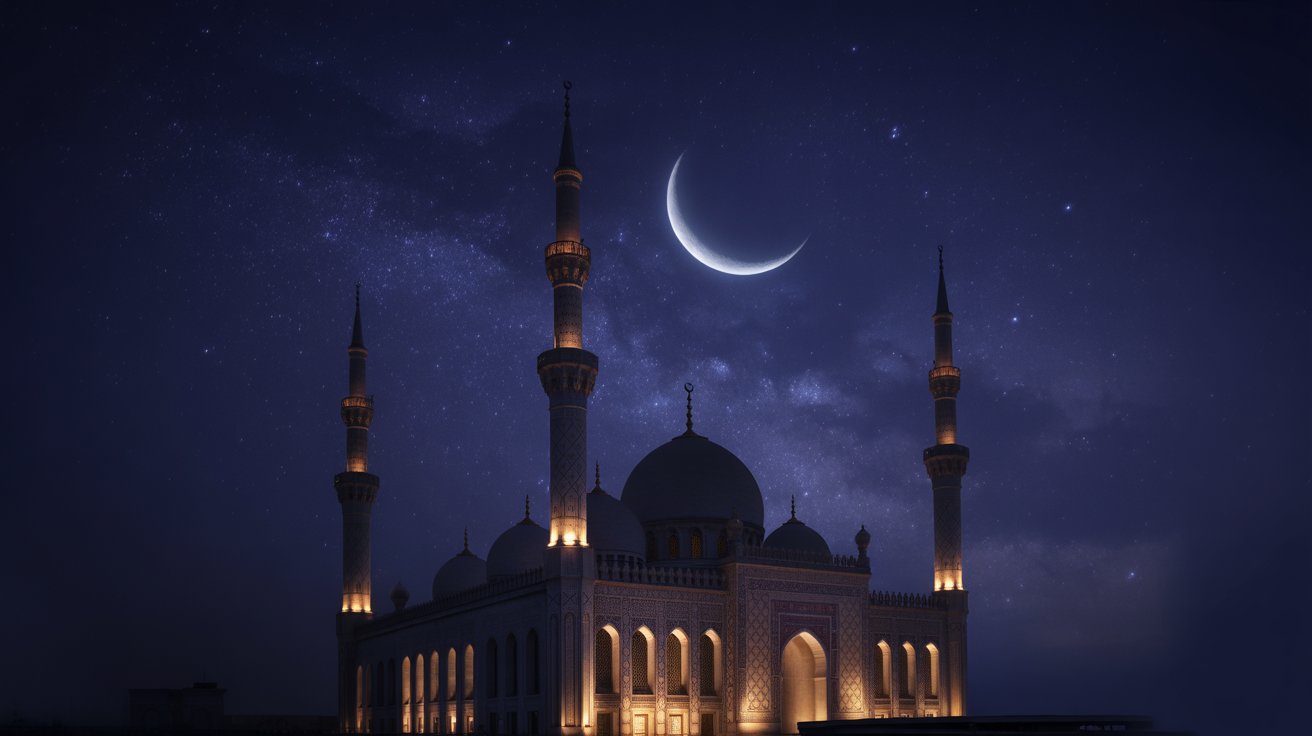
In Islam, death is not perceived as a sudden disappearance or a disaster. Rather, it is a natural boundary, beyond which life does not end but merely changes its form. A believer looks at leaving this world as a transition to what was promised from the very beginning — to an eternal existence where everyone will be recompensed according to their earthly deeds.
This article will discuss Islam's view of death, what happens to the soul after death according to Muslim tradition, and how the departing are bid farewell. It will also briefly touch upon the differences between Sunnis and Shias in funeral customs.
How Islam views death
In Islam, death is not seen as something alien or unnatural. On the contrary, every person from the moment of birth knows — or can know — that sooner or later this moment will come. In the Muslim understanding, earthly life is arranged so that death is its inevitable end, but by no means the final point. Beyond the threshold of physical existence, a new reality opens up, one that will last without any measure of time.
Importantly, Islam's attitude toward death is not based on denying natural human feelings. Sadness, the pain of loss, tears — none of this is forbidden or condemned when it comes to parting with a loved one. However, the believer is offered a different perspective: death should not become a cause for despair or rebellion against the established order. It is seen not as malice, but as part of a design that humans cannot fully comprehend.
Remembrance of death
One of the key nuances of the Islamic view is the idea that death can discipline the soul. When a person reminds themselves from time to time that their own time is also limited, they begin to set priorities differently. Less time is spent on the trivial, more on what truly holds value. This is not about gloomy obsession. Rather, it is an inner compass that prevents one from completely dissolving into the pursuit of worldly gains.
The earthly path in Islam is not considered an end in itself. It is described as a temporary abode, a segment that must be traversed with dignity and mindfulness. How a person acts, what they choose, whom they help or harm — all of this becomes material for accountability. Death draws a line under this stage and opens the next, where nothing can be corrected or changed. That is why in Muslim tradition, long years by themselves are not valued, but rather how meaningful each day and each action is.
Thus, Islam proposes looking at death calmly, without panic fear, but also without ostentatious indifference. It is a natural part of the order of things, reminding a person of their place in the world and of the purpose for which they came into existence at all. For the believer, death does not become an enemy to be feared, but rather a companion that sometimes demands one stop and reflect.
What happens after death

According to Islamic doctrine, a person's life does not break off after physical death. What is called death is essentially the separation of the soul from the body. The soul leaves its earthly shell at an appointed time, and this moment can unfold differently. It is believed that one who in life sought goodness and acted righteously passes away more easily and peacefully. For someone whose life was filled with unjust acts, the transition may be more difficult.
In Islam, there is an understanding that ultimately everyone awaits either paradise or hell. Paradise is described as a place of eternal peace, bliss and closeness to the Supreme Being. Hell, on the other hand, is a place of suffering and distance. However, the final decision as to where the soul will go is not made immediately after death, but only after the general resurrection and judgment.
After parting from the body, the soul does not disappear or fall asleep forever. It enters a special phase of existence — an intermediate state between earthly life and the day when all living things will be resurrected for the final judgment. In this state, the soul retains perception, memory and the ability to be aware of what is happening. The further path can be conditionally represented as a sequence of stages.
- Meeting with messengers after burial. After the body has been committed to the earth, two beings come to the deceased and ask questions about what is most important: about their Lord, about their faith, and about whom they consider their prophet. One who in life remained faithful to the basic principles and lived consciously is able to answer these questions. One who was indifferent to them or followed another path finds themselves confused.
- Abiding in the grave as waiting. Then comes a period sometimes called waiting in the grave. For one person, the grave becomes a place of peace and light, a kind of anticipation of what is prepared for the righteous. For another, it becomes a place of constriction and fear, a reminder that punishment awaits ahead. This state lasts until the great day.
- General resurrection and final judgment. At an appointed hour, known only to the supreme will, the whole world will be transformed, and all the people who ever lived on earth will be resurrected. Then everyone will be fully recompensed for what they did in life, and it will become definitively clear who will be worthy of paradise and who will end up in hell. This stage no longer belongs to the intermediate state, but it is precisely the final point of the path for which a person originally came into existence.
Thus, death in Islam is not silence and emptiness, but a transit station with clearly marked milestones. The soul continues to live, to be aware of itself, and to experience what its deeds have earned. But the full picture and the final decision will only be revealed later, when the history of this world comes to an end and eternity begins.
Islamic funeral traditions
When death has occurred and this has been confirmed, the relatives usually need to take care of preparing the body for burial. In Islamic tradition, this process has deep roots and is built around two main principles: respect for the body as something that temporarily housed the soul, and the pursuit of purity. The preparation includes several sequential steps, each with its own meaning.
- Washing the body. The deceased is washed, usually three times. Clean water is used, sometimes with the addition of simple agents that aid purification. The washing is performed by people of the same sex as the deceased, with the exception of spouses, who are permitted to do so. If the deceased is a child, both parents may participate in the procedure. In some cases, washing through a cloth without exposing the body is permitted.
- Shrouding. After washing, the body is wrapped in a simple white cloth without ornaments. The number of pieces of cloth may vary, but the general principle is unchanged: the shroud must be clean, modest, and not draw attention through excessive luxury. For men, three layers are usually sufficient; for women, five. In some traditions, the woman's body is additionally covered so that the contours of the figure are not visible.
- Final preparations. The body is placed on a stretcher or a hard surface, facing the direction of Mecca. The eyes are closed, the jaw is tied, and the hands are folded on the chest. In this state, the deceased remains until the funeral prayer and the transfer to the cemetery. If for some reason the burial is delayed (for example, to ascertain the circumstances of death), the body may be kept in a cool place, but delays are avoided as much as possible.
It is important to note that in Islamic tradition, performing an autopsy, embalming or cremation without extreme necessity is not customary. Exceptions are possible if required by sanitary regulations or the legislation of a particular country. However, the general approach remains unchanged: the body should be buried in the ground, after being washed and wrapped in a shroud. Any manipulations that might be considered disrespectful are avoided as much as possible.
If death occurs as a result of armed conflict or a person dies defending certain values, in some cases burial without washing is permitted — it is believed that such a departure itself constitutes purification. In ordinary life, however, the full cycle of preparation is considered desirable and respectful toward the departing.
Farewell and funeral prayer
Once the body has been prepared, the moment of farewell arrives. In Islamic tradition, this stage is not accompanied by lengthy ceremonies or lavish rituals. The main focus is on prayer and the swift committal of the body to the earth. The farewell is generally built around several key elements.
Swift burial as a desirable principle
It is believed that postponing a funeral without a valid reason is not appropriate. It is desirable to commit the body to the earth on the day of death or, at the latest, the following day. This approach is linked to several considerations. First, it shows respect for the departing: their journey to their final resting place is not prolonged. Second, it helps the relatives not to get stuck in a state of uncertainty when the body is still here but the soul has already departed for the other world. Third, it serves the practical considerations of cleanliness and hygiene.
Collective funeral prayer
Before the body is taken to the cemetery, a special prayer may be performed over the deceased. Usually this takes place in a mosque, a prayer house or in an open space specifically designated for this purpose. Unlike the daily prayers, there are no prostrations. People line up in rows behind the one reciting the prayer, and address the Almighty with a request for forgiveness for the deceased and for granting them peace.
This prayer is a collective obligation. This means that if a sufficient number of community members have performed it, the responsibility is lifted from the rest. If no one has performed it, it is considered a neglect on the part of the entire community. Attending such a prayer is desirable for men; women usually participate at their discretion depending on local customs.
Transfer of the body to the cemetery
The body is carried on a stretcher or special open bier to the burial site. Often this is done by hand, with people taking turns. The procession usually proceeds at a calm pace, without loud lamentations or funeral music. It is believed that loud grieving with tearing of clothes or shouting is not in keeping with the spirit of accepting the divine will, although natural quiet sadness is not condemned by anyone. In some traditions, women are advised not to accompany the procession all the way to the cemetery or to stop at the entrance.
Who may be present
In general, the farewell is open to all: relatives, neighbors, acquaintances, community members. However, there are nuances related to the differences between Sunni and Shia traditions. These will be briefly described in a separate section. In general terms, it can be said that no one forbids close relatives of different sexes to express their respect for the deceased, but the usual Islamic rules of modesty and separation during prayer are observed.
General order of burial
When the body has been brought to the cemetery, the final part of the burial begins. In Islamic tradition, this stage is also marked by modesty and simplicity. It is important that everything takes place with dignity and without unnecessary haste, but also without undue delay. Below are the main steps that usually accompany the burial.
- Preparing the grave. The grave is dug deep enough that the body is well protected from animals and the smell does not disturb the living. In compact soils, a niche is made in the side wall of the grave, into which the deceased is placed. In loose or sandy soils, it is permissible to make a simple hollow which is then covered with boards or stones.
- Lowering the body. The body is lowered into the grave headfirst or feetfirst — there are variations in different traditions. The body is then placed on its right side, and the face is turned towards Mecca. A woman is usually lowered by her closest male relatives, with the body covered from strangers' eyes. Women do not usually descend into the grave.
- Closing the niche and filling with earth. After the body has been correctly placed, the niche (or hollow) is closed with unfired bricks, boards or other suitable material. Then the grave is filled with earth. It is desirable that the first three handfuls be thrown by one of the relatives, after which others help with shovels. A small mound is formed over the grave to mark the burial site.
Coffin as an exception
In mainstream Muslim tradition, the body is buried without a coffin, directly in the earth (in a niche). A coffin is used only in exceptional cases. This may be due to loose soil, risk of cave-in, high humidity or the requirements of local legislation that mandate the use of a coffin. In such a situation, it is desirable to sprinkle earth on the bottom of the coffin. Using a coffin is not in itself considered a sin, but burial in a shroud without an additional wooden or metal structure is always preferred.
After the grave has been filled, those present may stand by for a while, reciting prayers or simply addressing the Almighty with requests for mercy for the deceased. Loud sobbing or funeral ceremonies are not encouraged, but quiet sadness is natural.
Differences between Sunnis and Shias in burial
In Islam, there are two main branches — Sunnis and Shias. Their doctrinal divergence arose in the first centuries after the death of the Prophet Muhammad and concerned primarily the question of who should lead the Muslim community. Sunnis believe that the leader should be elected from among the worthy. Shias, on the other hand, are convinced that authority should be inherited only through the Prophet's descendants. Over time, these differences have given rise to some variations in rituals, including in how the deceased are bid farewell.
Below are the main differences that may be encountered in funerary practice. It is important to understand that within each branch there are local peculiarities, and not all Shias or Sunnis follow identical rules. These are general tendencies.
Washing and shrouding
Sunnis perform the washing of the body three times with clean water. Water may be used without additives, except when necessary for purification.
Shias also wash the body, but often use water with the addition of cedar powder, camphor or other aromatic substances. The stages of washing among Shias may be more strictly separated: first water with cedar, then with camphor, then clean water. Otherwise, the general principle of careful washing is preserved in both traditions.
Participation of women in funerals
Sunnis generally allow women to be present at the cemetery, provided the rules of modesty are observed. Women may walk in the procession and be at the grave, although in some cultures this is restricted.
Shias more often adhere to a stricter approach. Women may accompany the procession, but as a rule they are not permitted to go to the cemetery or are asked to stop at the gate.
In both traditions, women being physically inside the grave during the burial is not envisaged. The lowering of the body is done by men — the husband, relatives or, if necessary, other men from among those present.
How the body is lowered
Sunnis lower the deceased into the grave feet first (with the feet downward). After the body is in the grave, it is placed on its right side and the face is turned towards Mecca.
Shias lower the body into the grave headfirst. However, after the body has taken its place, it is also, as with Sunnis, turned onto its right side facing Mecca.
Thus, the final position of the body in the grave is the same in both branches — the difference concerns only which part of the body enters the grave first.
Expression of grief
Sunnis generally maintain restrained behavior at funerals. Loud sobbing, beating one's chest or tearing one's clothes are not approved. Grief should be inward or quiet.
Shias allow a more emotional expression of grief. This is connected, among other things, to the historical memory of the tragic death of Imam Hussein, the Prophet's grandson, whom Shias revere as a martyr. At funerals and mourning ceremonies, sorrowful cries may be heard, and in some communities, rhythmic chest beating as a sign of empathizing with suffering.
Visiting the grave and marking the burial site
Sunnis generally strive for a modest marking of the grave. Placing a small stone or a plaque with the name is permissible, but lavish monuments, crypts and decorations are not encouraged.
Shias also do not seek luxury, but may allow a more noticeable marking of the burial place. Sometimes the grave is decorated with cloth, flat stones or more expressive headstones are placed.
What remains common
Despite the differences listed, the common ground between Sunnis and Shias is much broader than the divergences. In both traditions, respect for the body of the deceased, the desire to bury it in the ground facing Mecca, the recitation of funeral prayers and the prohibition of cremation as a standard practice are maintained. The differences concern mainly details and do not cancel out the main point: death in Islam is understood as a transition to eternity, and the farewell to a person should be dignified and modest.
How to honor the memory of the deceased after the funeral
After the body has been committed to the earth, the connection with the departed is not completely severed. In Islamic tradition, there are several ways to honor their memory and help their soul. These actions are not intended to change what has already happened, but to express love and respect, as well as to obtain spiritual benefit for the living.
Prayer and addressing the Almighty
The main form of remembrance is prayer for the deceased. The relatives may address the Creator with requests for mercy and forgiveness for the one who has left this world. It is believed that such prayer benefits the deceased and at the same time consoles those who remain. It is important that the prayer be neither loud nor demonstrative — it is a personal or family address, spoken with sincerity and respect.
What can be done after the funeral
After the burial is completed, the relatives have the opportunity to continue remembering the departed through specific actions. Here are the most common ones.
- Reading sacred texts. One may read sacred texts in memory of the deceased, asking the Almighty to count this reading as mercy for the departed. This can be done at any time, but especially in the first days after the funeral.
- Giving charity. Charity may be given on behalf of the deceased to those in need — in money, food or other help. This is considered a good deed, the reward for which may also reach the one who has already departed. It is important that the charity be sincere, not ostentatious.
- Good deeds done on behalf of the deceased. If the person has left behind children or close ones, they may perform good deeds, mentally dedicating them to the departed. For example, helping a neighbor, feeding the hungry or supporting someone who is in a difficult situation.
- Visiting the cemetery. One may come to the grave to stand quietly, recite a prayer or simply remember the departed with a kind word. Loud lamentations, holding meals directly at the grave and other theatricalized forms of remembrance are generally not approved. The cemetery is visited rather as a reminder of eternity and for quiet prayer, not for public displays of grief.
What is generally avoided
In Islamic tradition, it is not customary to organize lavish funeral feasts, order funeral music, erect expensive monuments as an end in themselves, or turn the burial site into an object of veneration. Also, celebrating the anniversary of death each year on a grand scale like a holiday is avoided. If relatives gather together to remember the departed, it is done modestly, with food that is distributed to the needy, not with feasting involving alcohol or excess.
Special attention is paid to not falling into despair after the funeral and not complaining against the established order of things. Sadness is natural, but it should not turn into a denial of the divine will or a desire to harm oneself. The deceased needs prayer and good deeds, not demonstrative suffering by the living.
Conclusion
Death in Islam is not a wall but a door. Beyond it, emptiness does not open up, but rather a different existence begins, one that will last forever. This view does not abolish either the pain of loss or natural sadness. However, it allows one to look at the departure of a loved one not as a catastrophe, but as a stage of the path that everyone sooner or later must take.
Islamic funeral and remembrance traditions are built around several main principles: respect for the body, the pursuit of purity, modesty and swiftness. Everything connected with bidding farewell to the deceased is done without excessive pomp, but with dignity. Faith does not require suppressing one's feelings, but offers support in the form of prayer, good deeds and the hope that the separation is temporary.
Differences between Sunnis and Shias in funeral rites exist, but they concern details. In the main, both branches are united: the soul does not disappear after death, the body should be buried with respect, and the living can help the departed through prayer and charity.
For those who face loss, Islam offers not so much ready-made answers to all questions, but a direction in which to move. And that direction is acceptance, patience and quiet but steady hope.
Key points
Below are briefly listed the main thoughts that can help orient oneself in the topic.
- In Islam, death is understood not as annihilation, but as the soul's transition to eternal life. Earthly existence is temporary and is a preparation for accountability.
- The process after death includes the separation of the soul from the body, the meeting with messengers in the grave, and a state of waiting until the general resurrection.
- The body is prepared for burial through washing and shrouding in a simple white shroud. Cremation is not the norm; burial in the ground is preferred.
- Burial is preferably done quickly, on the day of death or the following day. A collective funeral prayer is recited over the deceased.
- The body is lowered into the grave headfirst or feetfirst (depending on tradition), placed on its right side, and turned to face Mecca.
- A coffin is used only in exceptional cases (for example, due to loose soil or requirements of local legislation).
- In the Sunni tradition, women may be present at the cemetery; in the Shia tradition, they usually remain at the gate. Washing in Shiism is often supplemented with aromatic additives.
- After the funeral, the deceased can be commemorated through prayer, reading sacred texts, giving charity, and doing good deeds on their behalf.
- Lavish funeral feasts, loud funeral music and expensive monuments are avoided in Islamic tradition. Grief should be quiet and dignified.
Updated : 2026-05-03